ELPA works where tension, inequality, and unresolved disputes threaten community stability. Our peacebuilding approach helps people speak, negotiate, and rebuild local confidence together.
We work with community leaders, councils of elders, women, and youth to rebuild everyday peace systems that people actually trust and use.
Structured dialogue forums create space for shared problem-solving between groups affected by land, identity, political, and resource tensions.
ELPA promotes ADR tools that make disputes easier to resolve locally, fairly, and quickly without deepening mistrust.
Existing local leadership matters. We strengthen peace committees and councils of elders with the tools and confidence to convene and respond well.
Peace is maintained through routine local systems, not one-off events. ELPA’s role is to help those systems function better, include more voices, and stay trusted under pressure.
ELPA engages elders, women, youth leaders, and other legitimate local actors before formal mediation begins.
Facilitated sessions move disputes away from rumor and retaliation toward negotiation, listening, and agreement.
Follow-up work helps communities keep communication channels open and respond early when tension rises again.
Sustainable peace is not imposed from outside. It is negotiated, protected, and renewed by the people who live together every day.
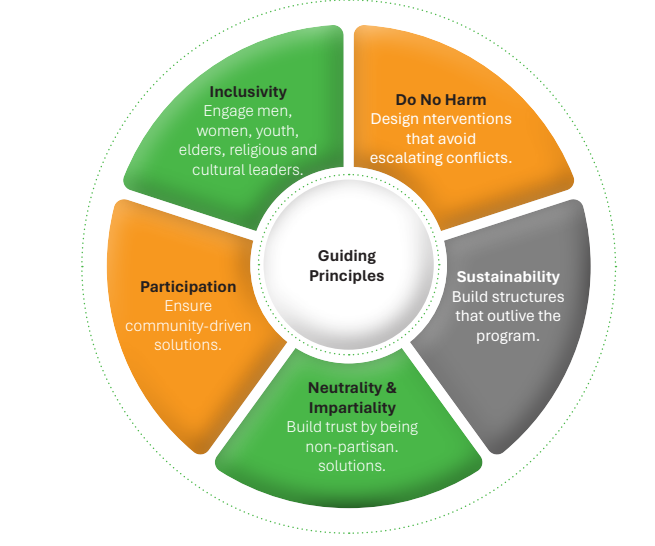
ELPA peacebuilding principleOur organization is cognisant of the fact that peace is the foundation of thriving communities because it fosters social stability, cooperation and justice, which are essential for inclusive economic development.
Our organization is devoted to promote peaceful coexistence, conflict resolution, and social cohesion within the communities we serve by strengthening dialogue, trust, and inclusive participation.
If your institution works on social cohesion, mediation, community resilience, or governance, ELPA can help ground that work in trusted local peace infrastructure.